Starving Art
Eleni Vlachos
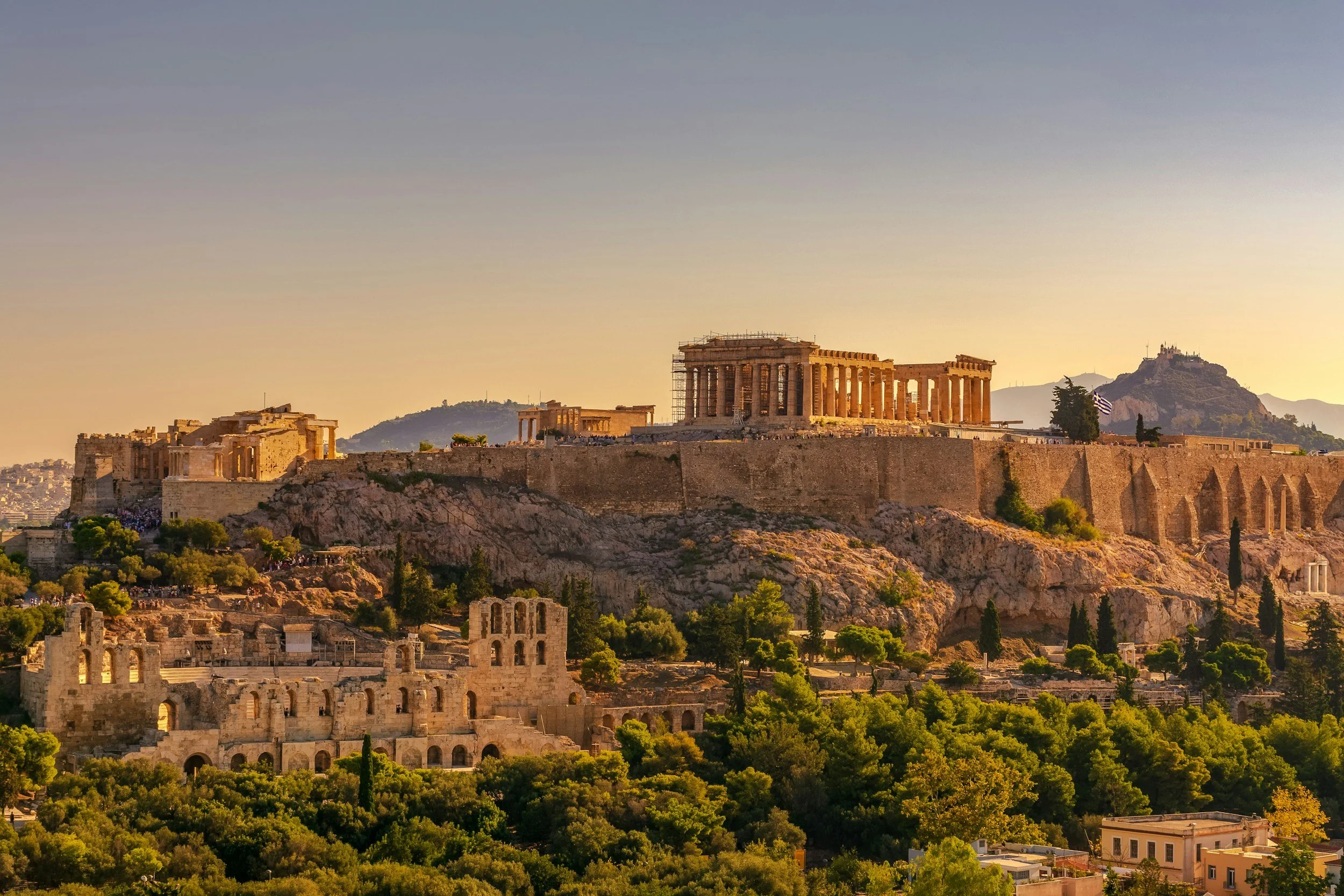
Paul and I walked down Tzavella street in Athens’ anarchist neighborhood, its walls a discourse of colors in urban intercommunication from the bumblebee yellows and blacks of AEK, the local football club, to the pastels of Alex Grigoropoulos, a fifteen-year old killed by police here in 2008. We spoke of the whys and whats of art, questions as ancient as Greece.
In Never Let Me Go—where clone children died to provide the rich their organs--Kazuo Ishiguro dispatched with the why. The children were taught art. Why, when they die by thirty? Ishiguro argued: We die too. What’s the difference?
A recent exhibit in Denmark prompted our discussion of the what, when artist Marco Evaristti encaged three small piglets in shopping carts (their youthful innocence led to headlines with variations of Piglets left to die). He starved them to direct the meat-eating public to the cruelties of its systems. In Denmark, the largest exporter of pigs, piglets starve as a matter of bad design; sows are bred to produce more piglets, and the number of sow teats do not match. Fourteen teats, twenty piglets.
“We do kill pigs to eat them,” Paul said, stopping to look up at Alex. “But we don’t STARVE them. That’s cruel! It’s not art.”
Starving is now an art, though, and in fact, it eats art. Starving contains art, if you look closely (its letters are jumbled). Look very closely, because the art is growing thinner by the moment from its lack of nutrients. Starving artists, nothing new.
“But we don’t torture them…” Paul trailed off.
Speaking of cruelty is like an elevator pitch; it’s best done quickly. I gathered momentum in my elevator because it ascended as high as China’s new pig factory skyscrapers. I shared reports of workers ripping sensitive parts of the pigs’ bodies (adding salt to an anus, laughing at their screaming). But the improvised cruelties of the powerful over the powerless are unseasoned compared to standard industry practices, trimming bodies like bonsai: Tails, balls, teeth. Less graphic, the boredom and discomfort, desires confined by concrete and cages. Movement--the last opus--arrives when pigs are prodded by electric shock up ramps into transport trucks, their last days starving in frigid or sweltering air. Nourishment is withheld because excrement makes unloading them unbearable.
“Regan Russell,” I continued, despite having reached the 28th floor of my elevator pitch, “was passionate about easing the suffering of pigs in transport trucks.”
Russell, part of Toronto Pig Save, provided small comforts at the end of the pig’s journey like death row’s last meal. She and a small group of volunteers stood outside the barricaded slaughterhouse while the truck awaited entry. They held water bottles up to the dehydrated pigs. Sets of brown and blue eyes blinked out from round metal slots as their thirsty mouths opened eagerly. Rosy lips clasped the bottles.
“That’s terrible,” Paul said, upset. “It’s not right—”
“And now you care,” I laughed, because he did. “The name of the exhibit with the starving piglets, ” I clarified. The art worked.
Paul shook his head. “That’s outrageous.”
The same week as the piglet exhibit, four paintings by artist Christophoros Katsadiotis were violently attacked or received their just dues depending on your view when politician Nikos Papadopoulos ripped down Icon 1, Icon 16, Icon 17, and Saint Christopher from the walls of the National Gallery in Athens from The Allure of the Bizarre exhibit. Papadopoulos alleged they insulted Orthodox saints, then stirred them with broken glass and floors and outrage. His outrage ignited on video and kindled the country.
Outrage is rage out of art, seething red faces and beating hearts. Not just religion: A vegan finding brilliance in a cruel act. Art as sacrifice. Bring me your hot faces, your pounding fists, your revocation of vegan clubs. But: Art is part gimmick. So is its defacement.
Papadopoulos, described by various publications as an ultra-conservative religious extremist, was not alone in his rage. “Our faith is not a game!” wrote my family member on a digital platform. Icons are art but not the other way around. Blasphemy is not art but art can be blasphemous.
Controversy is art. But is suffering art? Artist Evaristti said the piglets were given water and expected to live up to five days. He also refused himself food and drink until the exhibit ended.
The National Gallery removed Katsadiotis’ icon art to “ensure the safety of the institution, its staff, visitors, and artworks…” the Kathimerini paper reported.
Is censorship art? Removal is a stopping, a crashing to the floor in pieces so no one can see it anymore. It is a quieting, a secret that exists in mouths full of glue. It is shame and doubt. It is a threat, a murder. It is safety on freedom’s dime. A pretending, an act. It is tied up in Ag-Gag* confinements. It is starving the truth of its senses. Starving, an art?
In one photo, Russell stood in front of a transport truck holding a sign. A pink snout peeked out behind her. The sign read: “If you were in this truck, we would be here for you, too.”
A transport truck ran over Russell in 2020, killing her after she watered the pigs. Her last image: Giving the peace sign by the truck.
Papadopoulos was detained then released two days later.
The starving pigs of the And Now You Care exhibit were removed or stolen depending on the telling by animal advocates. “I realized that now at least,” Evaristti told euronews, “the piglets would have a happy life.”
*Ag-Gag laws “gag” would-be whistleblowers by punishing them for documenting animal agriculture.
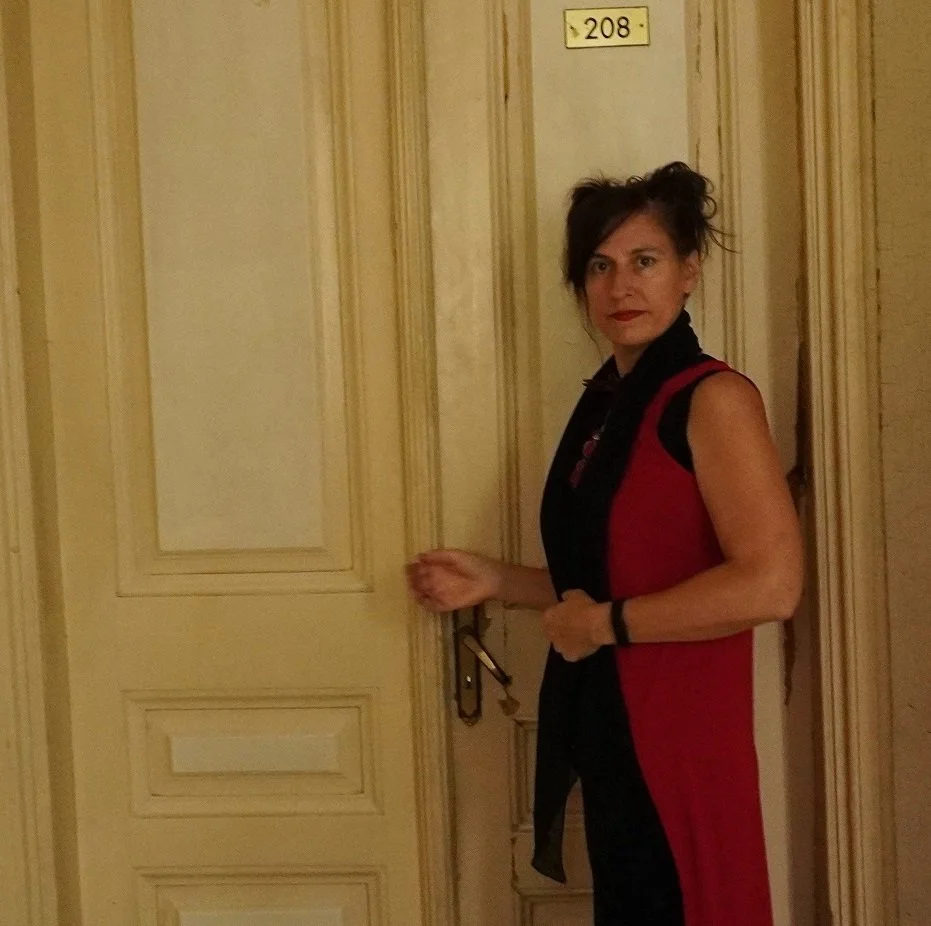
Eleni Vlachos is writing her first novel, several short stories, and creative non-fiction pieces. Her latest fiction, “A View of Hotel Poseidon,” was published in Roi Fainéant Literary Press. Her non-fiction has been published in The New Republic and The Philadelphia Inquirer. She also drums for an indie rock band. She was raised in Seattle and has grown older in Durham, NYC, Philly, and now Athens, Greece. Her new series Reading Like a Writer is on Substack.