Three Boys in a Boat
Dennis Vannatta
One Sunday when we were hardly more than boys, my friends Ike Trilling and Walter Howe and I took a trip to the lake.
Ike was driving his car specially equipped with controls for handicapped drivers. He’d broken his back when he fell off the roof of his house trying to clean a bird’s nest from the chimney. I visited him in the university hospital a few days later. He’d been a topnotch athlete, started left field for our college team as a freshman, and didn’t take well to the idea of being a paraplegic. “I’m going to beat this. I’m going to walk again,” he swore to us. Conviction, determination, and faith work miracles in Hollywood, but they didn’t mean shit with a severed spinal chord on the Missouri prairie in 1965.
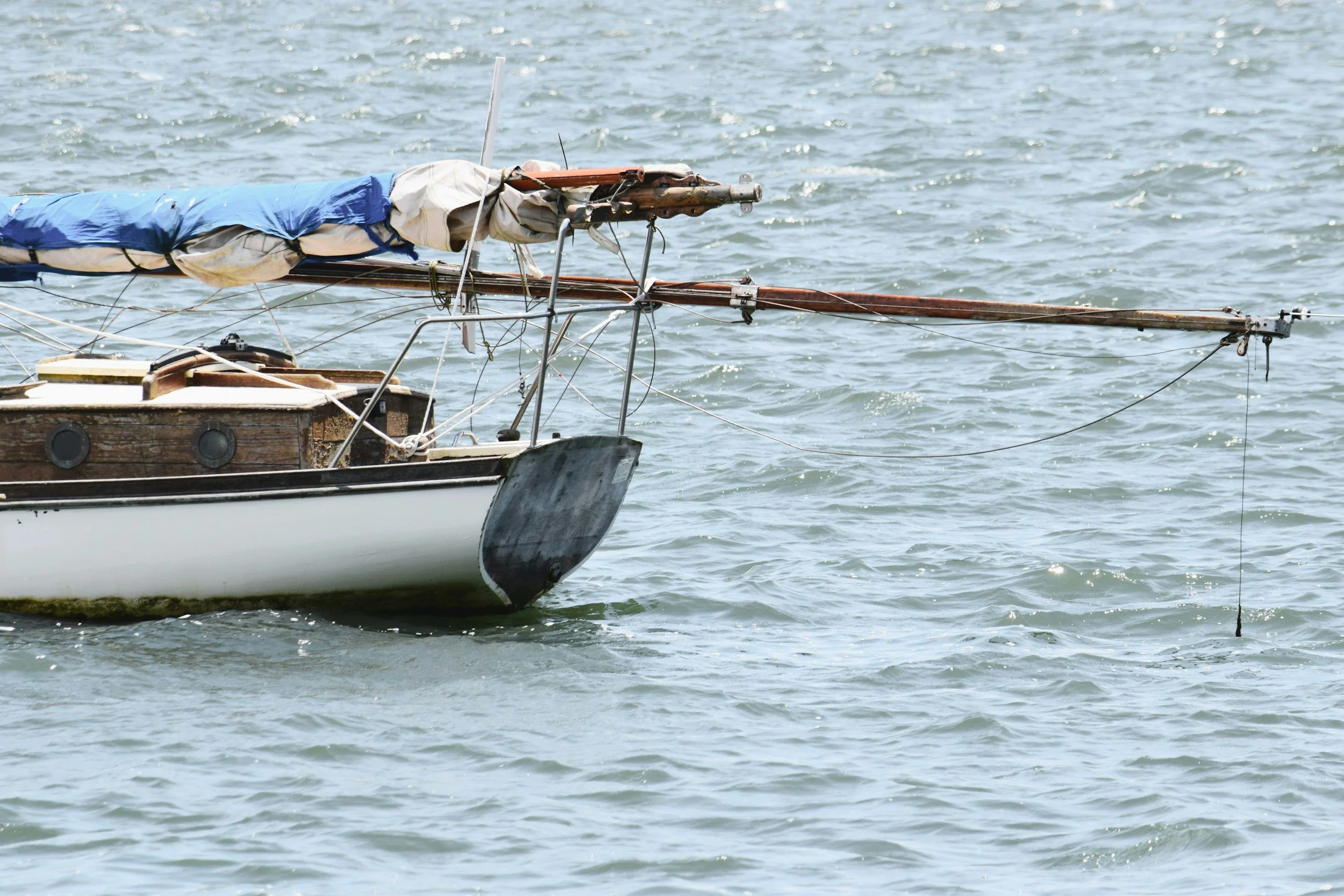
It was a year or two after that when we went to the lake, and by then Ike had resigned himself to the wheelchair while still resolved to get the most out of life. I admired the guy. He could drive that car, I’ll tell you that, even pulling a trailer carrying his dad’s motor boat. It wasn’t any little aluminum bass boat, either, but big enough for a captain’s seat, steering wheel and dashboard, windshield, and benches along the sides—the works.
I’d ridden with him any number of times but never hauling an outfit like that, and I thought about offering to drive, but he never gave me the chance. He pulled up in front of our house honking merrily and when I got to the car commanded, “Get in.” I got in.
So, there we were, the three of us sailing down the road toward The Lake of the Ozarks, the sun high and bright in a summer-blue sky, wind whipping our hair, maybe The Rascals’ “Groovin’” on the radio. It was that kind of day, a groovin’ on a Sunday afternoon kind of day.
One complicating factor: Ike didn’t like Walter. Walter hadn’t been one of our old neighborhood gang who’d gone through grade school and high school together, mostly scattering when college and the draft came along. I don’t remember how it happened that he and I became good friends, but happen it did. Ike thought Walter was a horse’s ass and wasn’t the only one, I have to admit. I don’t think Walter was that bad a guy, just a little desperate to fit in, be a hail-fellow-well-met, which sometimes caused him to say the wrong thing at the wrong time in an effort to be funny, while other times lapsing into silences that seemed sullen. Then too, round-shouldered and heavy-thighed with disproportionally long arms that hung down apelike, he was no good at sports, a strike against him to Ike and the letter-jacket-wearing crowd Ike hung out with when not with the old gang.
Oh, the look of utter disgust on Ike’s face when Walter came out of his house wearing an enormous straw cowboy hat, the brim wide enough for a Mexican sombrero.
Why would Ike have invited Walter to go along at all? I don’t know unless it was to help get him up into the boat.
Ike could do a lot of things for himself, but not everything. Once we got to the big gravel parking lot, the boat ramp down into the lake at one end, Walter and I had to help him out of his wheelchair and up into the boat, where he immediately assumed the captain’s chair. That’s where he remained throughout most of this tale. Most, but not all.
At Ike’s command, I took the wheel of the car and followed his instructions, hollered down from his perch in the captain’s chair, on getting the boat into the water. All I had to do was maneuver the car and trailer until it was lined up with the ramp, trailer-foremost. Then just back it slowly until the trailer was far enough into the water to float the boat. Simple, he said.
It was not simple. The first part, getting the car and trailer in line with the ramp, I finally managed. Some imp of the perverse, though, prevented me from backing in a straight line. I’d go straight for a few yards, but then, unaccountably, the rear of the trailer would begin to swing offline. Attempting to correct by turning the wheel—either way; didn’t matter—only exacerbated the error. I’d drive forward and straighten it out, then begin to back again and—whoops!—there the SOB would go off-kilter.
Ike gave me three chances before exploding, “Gary, get your ass out of there! Walter! I know you drive a truck for Acme. Take the wheel.”
Walter took the wheel. Straightened it out. Backed. Did fine for a few yards. Then: the trailer shoots off to the side. Repeat. Same result.
Ike sat in the captain’s chair, arms crossed over his chest, staring off into space. I leaned over against a nearby pickup, too weak from laughter to stand upright.
Finally, some geezer with a beer belly and fishing hat walked over to the boat. He must have been sitting in some vehicle watching. He asked Ike if he’d like him to put the boat in the water for us. Ike, tiny voice squeezed out between clenched teeth, said, “If you don’t mind.”
The man backed us into the water first try.
*
My memories of that day are pretty vivid through the boat-ramp business, but I don’t recall what happened next. Surely Ike took us on a spin around the lake, showed us what that baby could do because Ike liked to do things at top speed—drive fast, run fast (back when he could still run).
I can conjure up a vision of Ike gunning it around the lake in great slashing S-curves, Walter holding on to the sides of the boat in terror, for, awkward and pudgy and uncertain, he wasn’t fast like Ike. I can conjure up the scene not because it really happened but because I think Ike would have liked for it to happen that way, and Walter wouldn’t have minded too much since at least he was along, finally one of the boys.
The next thing I for sure recall, we were anchored in a cove or arm of the lake.
I was in the water, arms draped over a fat black truck-tire innertube. I can still, right now, bring back the caustic odor of that wet black rubber. I can feel the sun on my face.
Ike and Walter were in the boat, Ike for obvious reasons, Walter because he couldn’t swim.
In retrospect, I’m not sure why Ike had anchored there. Just to let me swim? More likely it was to save gas. Don’t let the fact of the boat give you the idea that Ike’s folks were well-off. Quite the contrary, we were all from blue-collar families, all of us working our way through college in various odd jobs. We knew where every dollar went. Three college-age guys today on a boat on the lake, you’d expect them to be pounding that Bud. But, good Baptist and Presbyterian boys, we weren’t there to drink, either.
Whatever the reason we’d stopped there, I was enjoying myself even if Ike and Walter weren’t getting much out of it.
Maybe that’s the reason for what happened next: Walter got bored. Or maybe it was just another of his miscalculated efforts to be one of the boys.
Anyway, what he did was this. He tossed the other big fat black innertube into the lake a couple of yards from the boat and then with a loud yahahaaa! jumped feet-first into it.
He disappeared through that hole like a rock through a lily pad.
He came up spluttering and flailing away trying to grab hold of the innertube only to knock it farther away, went down again, came back up straining for the tube, knocking it away.
I finally came out of my drowsy, sun-beguiled daze enough to laugh uproariously, then realized he was in real trouble.
I went for him, slow going since I was pulling myself through the water with one hand while holding on to my innertube with the other. I was a fairly good swimmer, but not good enough to save myself and a pudgy, desperately clinging drowning man. I needed that tube.
I made it to him, and he grabbed hold of my tube, or maybe his own, I don’t remember.
It was then that I heard Ike. His voice wasn’t coming from up in the captain’s chair but lower, closer to us. Then I saw him.
He was in the water, holding on to the anchor rope with one hand and waving something in the other.
“I’ve got the son of a bitch’s hat!” he hollered.
*
I think of getting drafted as following the trip to the lake almost immediately, but it would have been at least another year or two before Walter and I and Terry McFee, another friend of ours, were all inducted within the span of a few weeks. Ike didn’t have to worry about the draft, of course, but I know him. I’m betting he would have volunteered for the Marines. Walter and Terry did volunteer, but for the Air Force, trading an extra year of their lives to escape ground combat in Nam. I took my chances on two years in the Army and wound up guarding pine trees in West Germany.
Walter was the first to go in. By then he was married, and a couple of weeks before he was to report for induction, Terry and I helped him move his and his wife’s furniture from our hometown to her parents’ house in Kansas City. They didn’t have a lot, just enough to fill the little trailer he’d rented and hitched to the back of his Pontiac Firebird.
We made it to that big curve in the highway just north of town where the trailer began to fishtail behind his car. Trying to correct by turning the wheel only made it worse, and hitting the brakes was calamitous. Car and trailer jackknifed, the trailer breaking away from the hitch and rolling over, the car going into the ditch and leaning gently over on its side.
None of us was hurt. We walked to the Pitstop Diner, maybe a quarter of a mile on up the road, and Walter called his dad to come with a wrecker. Then he spoke to Sheila, and he started to cry.
I know I know, the symmetry of the two fishtailing trailers is too neat to be believable, but you can tell it’s true by one fact: it’s utterly meaningless. There’s no connection, no point to it. It doesn’t mean a goddamn thing. We were entering a world where nothing made much sense.
I lost touch with Terry. If I ever learned where the Air Force sent him, I don’t remember.
I never saw Walter again but heard that he went to Thailand and came back addicted to heroin. He managed to kick the habit and in fact worked with Vietnam vets and others plagued by addictions. At our twentieth high school reunion, our class president read off his name among those who were no longer with us. Word was that he had committed suicide.
*
Ike is still amongst the living. I spoke to him by phone earlier this evening. We call each other once or twice a year to catch up.
He’s bedridden now, he told me. The only time he gets out is for a visit to one of his many doctors. His wife drives him in a van equipped with a lift to load him and his motorized wheelchair.
We’ll talk about health issues, politics and the weather, about the Cardinals and Royals and Mizzou’s chances in football this year. You’d be surprised how little we talk about the past. I’ve never brought up the trip to the lake. Was there anything about it he’d want to remember?
Walter and I would have had to get him back up into the boat somehow. It’d been hard enough on dry land, but in the water?
There was an aluminum ladder built into the stern of the boat. Probably we got him up that somehow. He would have done most of the work on his own. Hauling himself around in the wheelchair all the time, he had powerful shoulders and arms.
I don’t remember getting him into the boat, but I do remember, once he was in, his sitting with his back up against the side and his legs stretched out straight and flat against the deck. His jeans, soaked, were plastered firmly to his legs so that you could clearly see their shape: two knobby sticks, absurd, not just useless but pointless.
Ike once told me that he’d never had a dream where he was in a wheelchair. He didn’t say what he would be doing in his dreams, but I knew: walking, running, chasing down balls in the outfield, rounding third and sprinting for home.
Was that Sunday at the lake a good memory for him? He’d been a by God hero, hadn’t he? Throwing himself into the water to save—not a hat, don’t be silly—but Walter, while I’d floated draped across an innertube, so beguiled by the sun like molten silver on the almost-still water that I could hardly rouse myself enough to respond to Walter’s desperate voiceless thrashing.
Certainly not for a hat. I can see him waving one, though, see it just like it was yesterday. But a ludicrous cowboy hat like you’d find in a souvenir shop at Bagnell Dam among corncob pipes and jars of Uncle Henry’s Kiss-Ass Barbecue Sauce? Not likely, Walter being understandably self-conscious about his looks and wary about drawing attention to himself. He did favor ballcaps to protect his prematurely-balding head from the sun, though. That cowboy hat, now that I think of it, that’d been Joe Nixon’s on Kid’s Day our senior year in high school, and Benny Ames snatched it off his head at the waterworks park and threw it into the creek, and then something else happened, surely, but I’ve forgotten just what.
And, now that I think of it, now that I think of it, the sun like molten silver on the water, that was Gulf Shores, Alabama, one spring break when my wife and I went cheap and rented a condo on the canal instead of beach front and lamented it from the moment we unpacked the SUV until we were sitting on the deck overlooking the canal, glass of chilled Chablis in hand, and suddenly the water was on fire with the setting sun.
Had it even been a sunny day, that Sunday on the lake? If it was a Sunday. It could have been any day of the week we all three happened to be off work, after all, and . . .
Enough. Enough. No more questioning, or I’ll start wondering if I was even there. And did it even happen at all? And was I really, once, many years ago, a boy?

Dennis Vannatta is a Pushcart and Porter Prize winner, with essays and stories published in many magazines and anthologies, including River Styx, Chariton Review, Boulevard, and Antioch Review. His sixth collection of stories, The Only World You Get¸ was published by Et Alia Press.