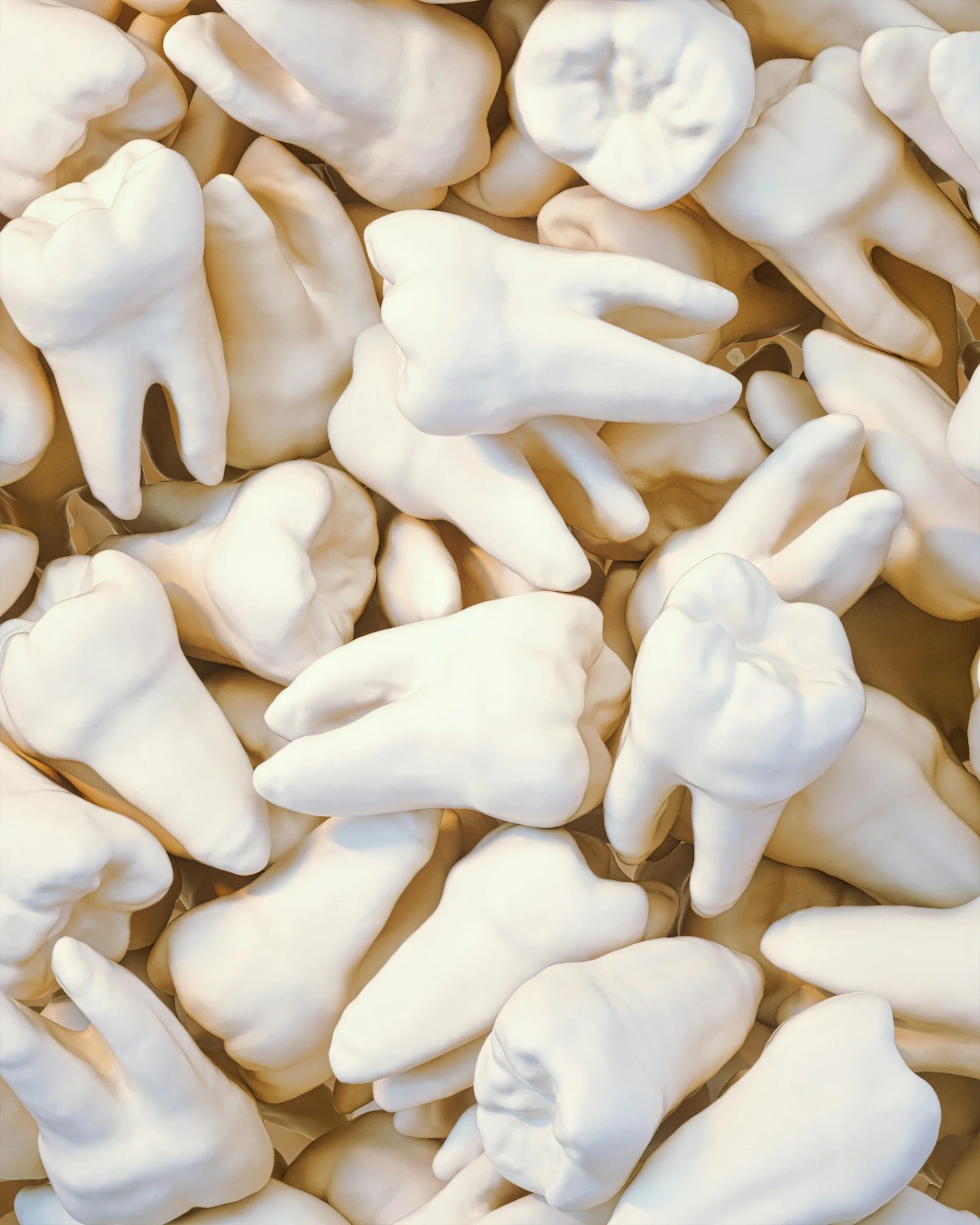
Knife Scars, 乳牙 / Milk Tooth & Fundamental Theorem #1
Yuhan Wu
Knife Scars
After Kim Aeran
too early
for dawn to split
its pale rind
open. mama is already
cutting, and i am
living on her
scars. she chops
scallion, ginger—
soft rot, paring away
whatever life refuses
to stay clean. her
knife keeps finding
its mark, the cutting
board bleeding
its soft wooden pulp.
everything in this
kitchen is dying
for me. i stand
breathing while inside
my organs thicken
like plump, dark fruit,
beating in time
with the descending
blade. the room
is alight with her
pulse, bits of
mama falling
softly into bowls.
i swallow
the food and the
cuts clinging to
it. i am hiding
thousands of knife
scars in this glutted
body glistening
with shame,
as if shame were oil
mama rubs
into my ribs. outside
the light is still
unripe. a hard,
green sun that
refuses to
sweeten. i cannot
keep anything.
i open.
乳牙 / Milk Tooth
the taste of it lingers, a looping memory, tongue orbiting the soft hinge
of a tooth about to fall. knowing each touch will summon that tender ache,
still I return, again and again, against the stubborn wobble I push it, demand
it to drop, to end the waiting. yet each night I coax its roots back in, relishing
the coppery sweetness spreading slow in my mouth. I live inside this circling
pain until one day it loosens & falls. I was six when my front
tooth tumbled from my mouth & I caught it, a small moon like a secret,
nestling in my palm. milk- white, stippled red. pulsing faintly, as if wanting
to crawl back under the damp hush of my tongue, but before I could tuck it in
grandma mistook it for a fish bone & flicked it away with the leftovers. I tore
through the seeping saccharine decay in the black garbage bags, digging through the soft
collapse of what had fed me for the part of me that died along with it. the air hummed
wet, carnivorous. my tongue kept searching for the ghost of the small bone but finds
only an empty gum, flesh pliant & stupidly soft. even the pain I could’ve
returned to has dissolved. in its place a new growth itches upward. white bud
nosing through. say it’s bloom, say it’s a kind of mercy, say it’s proof
that everything beautiful arrives only after something is lost, that pain is the language
by which the body learns itself. we are all victims of that gentle violence
called growing up. even now when I open my mouth something invisible falls out,
a glint of myself, & I keep swallowing it back, forgetting that every deciduous tooth
takes root in the hollow left by the first wound — forgive me,
I was never good at saving the small parts that once kept me whole.
Fundamental Theorem #1

Example 1. Evaluate ∫ f’(x) dx. Which of the following statements is true?
A. On the whiteboard, Ms. S writes a neat +C at the end of each formula. The constant
of integration is arbitrary, she says. The way names are arbitrary. How she calls me the name of
another Asian girl a third time. I correct her without receiving an apology. I jot down my own C
words: customs, confusion, citizenship, constant, the residue carried from one equation to the
next.
B. We are all functions of forgetting. In the immigration queue, my father spells his
name the way one writes a proof, terrified of being wrong, in rigid, foreign alphabets. His
handwriting smooths out over the years, until the loops stretch obedient, until lines become just
lines. Mother keeps her old syllables tucked in a drawer. Beside it, a photo of her parents
softened from unfolding, creases mapping a life she cannot retrieve.
C. Taking the derivative, we stripped ourselves into pieces. Two stuffed suitcases as our
initial condition. Dialects flaking off our parched tongues, names rewritten into simpler notation.
Each step erases a coordinate from home as we cross the axis called border, called country. All
that we’ve surrendered pool under the curve, thick and unsimplified. The slope burns. The area
beneath swells wide and heavy.
D. When you try to integrate yourself back, you won’t get the same result. Like the
half-second pause before my mother finds the right word, or the snap of my head at a Chinese
syllable. It isn’t addition or loss. It’s not something we can determine, only that it exists.
Somewhere between the limit and infinity, we accumulate what is lost, and somewhere in that
sum, we are rewritten.
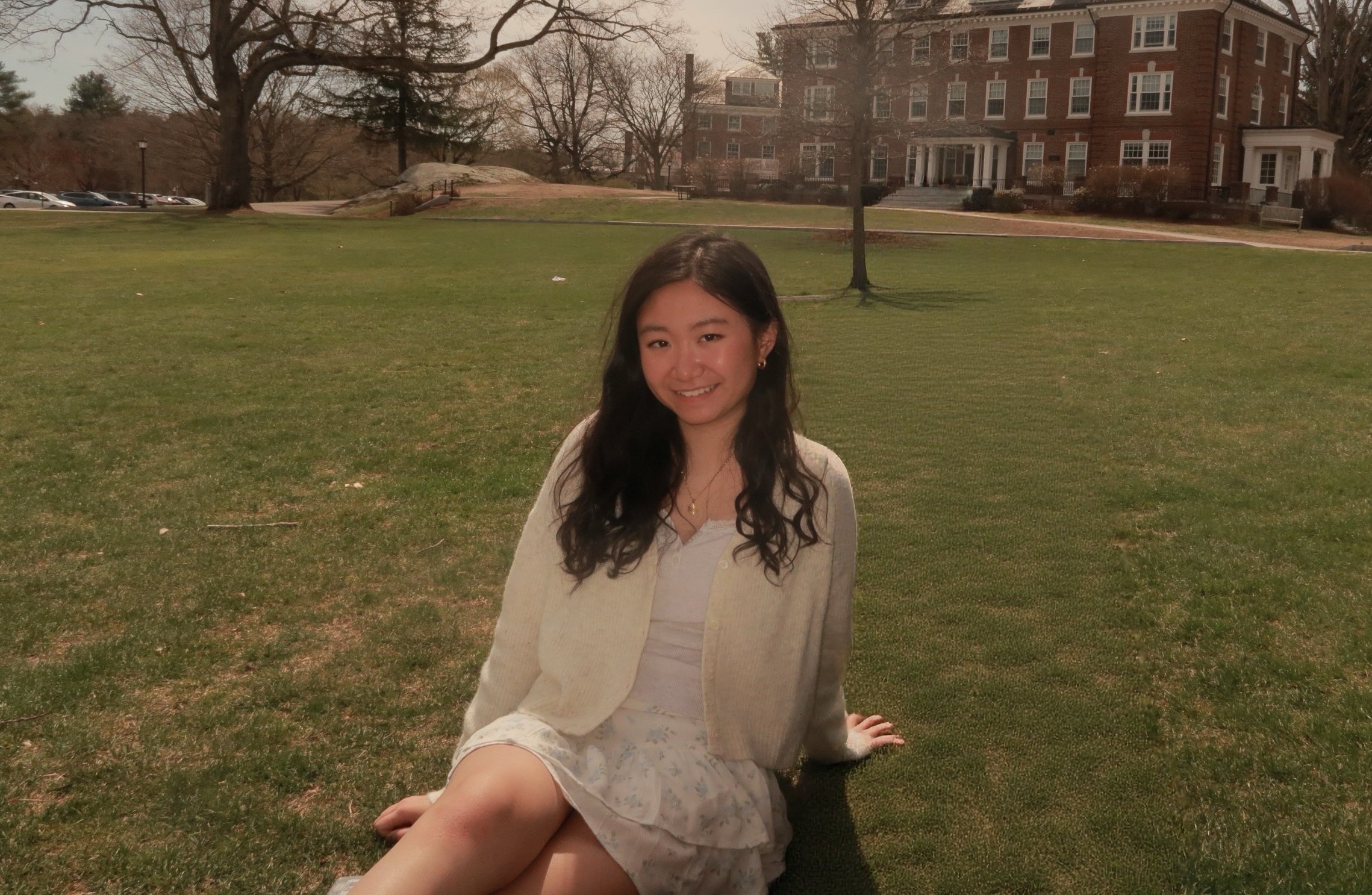
Yuhan Wu is a writer from Shanghai currently residing in New York. Her work is published or forthcoming in Aster Lit, Apricity Magazine, Eunoia Review, amongst others. She has been recognized by Smith College, Hollins University, The New York Times, and the Scholastic Art & Writing Awards.