
Miriam
Henry Lin-David
In the afternoon I finally had some free time. We sat on our usual bench, overlooking the pond in her neighborhood, sweating and tearing loaves of mushy bagged bread to feed to the snapping turtles.
“He used to be a real randy,” Miriam rasped as her flabby throat jiggled. “When we first got married, he would grab at me all day. Now he whines like a dog for me to get him off—especially since I do all the work for it. His excuse is always his hips, but it’s not like mine are much better. God I hate him. And what he’s really terrible at is the theater of it all. He just stares off at the ceiling with his mouth open. Like a true imbecile.”
It was always like this. We’d meet, she’d tell me a new reason why she hated her husband. Last week it was about his hearing problems, how she had to shout into his earholes so her insults could squeeze past his impacted buildup of wax. The week before, it was him rinsing his dirty dental floss in the bathroom sink so he could reuse it the next day. And before that she spent an hour chattering about what she called his “sewage musk.” Miriam used to be a court stenographer, and she liked to say that all her talking nowadays was to make up for lost time. I watched her pull the bread apart with her stiff gnarled claws for hands, ruined from decades of work. My fingers still ached from early that morning, before sunrise, when I had crept into the apartment of a half-asleep prosecutor and strangled him with a red jumper cable. There was only the slightest struggle; his body had surrendered quicker than I expected. It was still unbelievable, that a neck with such little will to fight back could be worth three grand.
She clutched the handle of her walker for leverage and shifted in her seat to look at me. “You get what I mean.” She gave my arm a pinch with a mangled hand. “Jesus, what I’d give to have a body like yours again. Take it from me: Put it to good use while you can. Here, have some gum.”
I took a piece and nodded to let her know that I had indeed put it to use, at least a few times in my life. Miriam smirked and looked me up and down approvingly. I was wearing one of her old blouses foisted on me the month before, under the guise of cleaning out her closet, in a cardboard box full of other garments. The rest of the clothes had never left that box, but I did wear this shirt on occasion. The sleeves were too short and it was a little tight around my ribs,
but at least it was black.
I watched the turtles swimming by the shore as I chewed. The pond water had something toxic that gave them a painful skin infection, making them all bumpy and mean. One particularly ugly snapping turtle was getting territorial, boxing out the other animals and thrusting with her pointed face if they got too close. That one was my favorite. I tossed some bread in its direction.
“Anyways, when can you get around to killing him?” she asked, and I tried not to sigh. I’d gotten used to this question from her, but I always hated the implication that I was simply “getting around” to doing the job. As though I were a procrastinator.
I’m free tomorrow evening, I said. We can do it as we discussed. You find an excuse to be out of the house for a couple of hours, and I’ll make it look like an accident. Like he fell down the stairs. Or—
A car backfired a few streets away, and my mouth suddenly tasted like vomit. I clutched the side of the bench for a moment. Miriam didn’t seem to notice.
“Oh, yes. That would be peachy. Just make sure there aren’t any stains on the hardwood.” She rummaged through her ratty canvas bag, pulling out items: a dirt-brown crocheted shawl, a little swiss army knife, a laminated senior bus card with her mascara-caked face, a plastic baggy of loose toothpicks. Finally she found a lighter and a shiny new pack of cigarettes. “I really hope my next lover is younger. I don’t suppose I could have a quick smoke?”
You can if you really want, I told her, though you know it’s not my favorite. She considered it, and then put the unwrapped carton back into the bag, bringing out a bright pink vape box instead. A sweet-smelling white cloud bloomed from her mouth before dissolving in the sunlight. I asked where she was getting this crap. “DoorDash,” she coughed, and took another puff.
“Actually, tomorrow is no good,” Miriam said finally. “He’s taking me to the movies. I think it’s a cartoon, something for children. But it’s at one of those fancy theaters where they wear bowties and bring food right to your seat. Maybe next week could work. Also, just an idea—what if it looked like he slipped in the shower? Very unsuspicious. And that could make the cleanup easier. We should meet next Friday to talk about it some more.”
That’s fine, I said. I threw the last of my bread towards my turtle and watched him jet forward, still keeping a beady eye on his rivals. I had to go pretty soon after that anyway in order to catch the 320 bus downtown for my next job. There was a dentist with bad gambling debts who needed to be made an example of.
My foot was hurting again the next morning, as I limped to the corner mart to buy some pizza pockets for breakfast. I thought about messaging Dr. Huang, but I could never get the VA website to load. Last appointment, she said the shrapnel was irritating the bone and I might need surgery to remove the remaining bits. I hadn’t liked the sound of two months’ bedrest, but it was getting worse. I wished Dr. Huang wasn’t so kind. It made me uncomfortable. Sometimes during appointments I’d spit into a trash bin or pick my nose or something, to try to get a rise out of her.
I shuffled back up the stairs to my condo and lazed on my mattress until the afternoon, when my meeting was. It turned out to be with a skinny freckled high-schooler. I’d never had a potential client who was a teenager before. I guessed he had found my info on the internet, or maybe an old phone book under “Personal Services.” We met at a secluded taco restaurant stuck to the side of a gas station, both of which were owned by the same Cuban family. He’d ordered himself a lemonade. His ears looked like satellite dishes, tilting up and down as he spoke. Eventually he gave me a peek under the table; inside his bookbag was a messy oversized stack of one- and five-dollar bills, held together with a dirty rubber band. You could tell he wanted to be taken seriously, with his creased button-up shirt and the way he kept saying All things being equal.... I told him that, while in theory I was okay killing teenagers, I won’t kill women. That agitated him.
“Maybe you could just kill her, as an exception. If only you knew what she did to me...but it’s simply too awful to retell. You should know that when I try to eat, I just throw it back up from the stress. I hide in the bathroom stall with my feet up off the floor and hold my breath to see if I can make myself pass out. You might think that’s an exaggeration, but it’s not. And all the while she’s out there, walking and talking and living like a normal happy person despite her terribleness. Listen: I truly believe that the world would be a better place with her gone, all things being equal... Can’t you just trust me? Please?”
I had some general ideas of what to tell him. I said that life would get better, especially once he got the hell out of this place and started over, maybe in a different rinky-dink city. He’d never have to see that person ever again, I told him, unless he wanted to look them up 15 years later and find out they were still working the same shitty diner job they had in high school. And then it’ll all have been worth it.
I didn’t mean to add that last part; as a rule I try not to lie. But he didn’t care much anyways; he just glared right past me the whole time I talked. After a minute he started to speak real fast and angry, his ears twitching all over the place.
“You know, I don’t understand why you wouldn’t kill her. Is it because you can’t imagine that a girl would deserve to die? I promise that she deserves it, all things being equal. Girls aren’t all angels, that’s for sure. I mean, Christ, you’re out here killing people left and right, I bet. You—you fricking—murdering—stupid—sexist—”
He pulled out an asthma inhaler and took a big inhale, still quivering from the excitement. I left pretty soon after that, and the next couple of days I spent at home: sharpening my combat knives, dabbing hydrogen peroxide on my jeans to remove the tiny drops of blood, watching online videos about the benefits of daily stretching, et cetera. There was a big sale on night-vision goggles at my favorite online military surplus store, so I bought two pairs. The jobs had sort of dried up, but I wasn’t too worried about the lack of clients. If you’re in this business you know there are busy times and lulls, and that it all evens out. Though I still felt uneasy. I kept thinking about that kid. There were a few hours when I wondered whether he had put some sort of hex on me, though I don’t actually believe in that witch stuff. Honestly, what bothered me most was that he thought I was some sort of bigot. It’s not like I thought that women were guiltless, by any means; I just didn’t want to be involved in killing them. It felt personally distasteful. I didn’t get a rush from bumping off men or anything, I could just stomach it better. And I had to make a living somehow.
On Friday, at the pond, Miriam never showed. It wasn’t like her; she was a very punctual woman. I waited for an hour anyway. Later that night I got an email, where she told me that her husband was in the ICU for a stroke. So his murder would have to wait, because the neurologist had said he wouldn’t be back home for another seven to ten days.
“It’s just wrong to kill someone in a hospital,” Miriam informed me the next day on our bench, for what she called an “emergency caucus.” The rain pelted the water’s surface, and I held the umbrella as she flung bread harder and harder to keep it from disintegrating in the air. “Not on purpose, at least. It’s bad karma. For a few hours I actually thought he might die, but the doctors say he’s improving. Today he recognized me, even with all the drugs they’ve got him on. But the whole thing is dismal. The van that picks me up in the morning smells like burnt socks. And they won’t let me smoke in the room.”
I hadn’t even noticed Miriam had stopped throwing bread until I saw the lit cigarette in her mouth. The smoke ballooned underneath the umbrella and made my head swirl a little. I looked out towards the water. There weren’t any snapping turtles out swimming in the rain. About 40 feet out there was a boulder poking out where the water was still shallow, but the turtles weren’t there either. Miriam mushed her cigarette butt against the wooden armrest of the bench, then pulled out a new one. As she lit it, she spoke: “This crap wouldn’t be happening if you’d just killed him already.”
It was a meaningless comment, which I knew, probably. But it was cold, and wet, and I was still holding the umbrella for both of us; my head was throbbing from the tobacco smoke; and most of all, I was still thinking about that kid. He was a coward, I had decided. But maybe no different from the rest of the people I had worked for: who sent me emails from throwaway AOL accounts, who couldn’t make eye contact, whose money I had taken without a second thought. He had hated that girl, and I wondered if he hated me now. I shouldn’t have told him that vague garbage about life getting better, or whatever I said. That wasn’t my business; I was just supposed to kill people. And what I did—taking lives—it required full conviction, and full truthfulness. You don’t want to wake up one day and realize you’re suffocating from the sudden guilt of what you’ve done. The thing is, honesty is most dangerous when it starts to decay around the edges. You need to amputate the diseased flesh, quickly, before the rot spreads. I turned my full body towards Miriam, who instinctually lowered her eyes to the ground as she continued sucking on the cigarette
You reek, I told her.
We sat for a little while longer, but eventually she just pulled herself up on her walker and started for home. I didn’t say I would walk her back; I just followed her, shuffling a few steps behind to hold the umbrella. The road switched from asphalt to dirt and the houses got smaller. The rainy air made the bones in my foot hurt, and at one point I stumbled a little. But Miriam didn’t stop, not until we’d arrived at the end, where the dirt road ended and the dirt of her front yard began. The house was the smallest and brownest one on the street, backdropped by a forest of crooked pines, with windows and a door that made it look like a surprised head popping out of the earth.
That was the first and only time I ever saw where Miriam lived. She didn’t invite me in, though I’m not sure what would have happened if she had. Maybe she could have made a pot of tea, and I could have apologized for earlier, told her about the freckled boy who might have hexed me. But I knew she didn’t like to hear about my job. And ultimately that kid probably hadn’t cursed me after all, since I got a text on the bus ride home, asking me to off somebody’s ex-business partner or something. Then around dinnertime someone left me a voicemail about their future son-in-law, who they found out had lied about getting an adult baptism. Like I said before: It all evens out.
Two weeks later, Miriam emailed me to arrange a meet at the pond.
“I don’t need your services anymore,” she said. She spoke differently, formally. All the consonants were very well-enunciated.
Oh, I said. I’m sorry to hear that.
“Now that this business with the hospital is over, I have decided to keep him alive after all. My blood pressure used to be good, but it has worsened severely after all this talk about killing. Once you get to be my age, it’s important to appreciate what you have. And after having the house to myself for a little while, I have realized he’s not so useless after all. He microwaves our frozen meals every night. His hands are small enough to fit down the trash disposal and fish out the rings I’ve dropped. And his pension pays for our National Geographic subscription. Plus, he says the stroke ruined his sense of smell, so I can finally smoke in the house again. Take this—” and Miriam pawed through her bag. She pulled out a large Ziploc bag with banded stacks of 20s—two of them, meaning four thousand dollars—which she told me was for “consulting fees.”
I don’t take payment unless I agree to an assignment, I said. Miriam held the bag out towards me more forcefully, and I waved her off again.
“You have to take it!” she snapped, which gave her a coughing fit and made her drop the cash on the ground. She rummaged around to find her vape and took a deep drag, then hacked some more. When this was happening I took a real look at her: the sunken eyes, the thin lips, the gnarled hands. The folds in her face were deeper than I remembered, and there were blotchy bruises on two of her fingers. She looked so old.
When Miriam finally managed to stop her coughing, she spoke hoarsely. “It’s for you. You can take it or leave it there in the dirt, it doesn’t matter to me. But we’re square now. Your work is done. And when Barney dies, it’d better be his own damn fault.”
Barney. I hadn’t even known his name. Miriam stood there, waiting for me to say something, and eventually pulled herself up with her walker and started shuffling back home. Out on the pond, the turtles had kept their distance from us. There were a half dozen, dozing on that big rock jutting out from the water, seemingly grateful to nap despite their knobbly, perpetually pained existence. They knew I didn’t have any bread for them.
I didn’t feel right leaving all that cash just lying there for someone to find. So I picked it up and stuffed it down my shirt. I wondered how much longer I’d need to do this work. I tried to remember the last time I had checked on my savings, lugged that duffel out from the back of the closet and counted everything. How many more snapped necks would it take to retire? Fifty, a hundred? Maybe it was time to start a countdown: tear out a piece of notebook paper, draw a hundred little stick men, cross them out one at a time.
And after that – who knows? I’d finally call a surgeon, fix my foot. I’d buy a condo in a different rinky-dink city, or live in an RV, or a lighthouse. I’d reinvent myself as a stamp collector, or no—a nature photographer. Yes, that would be nice, listening to the sounds of the grass and the wind all day. Plus, I’d be decent at it, I bet. The thing about me is I’m pretty good at waiting around.
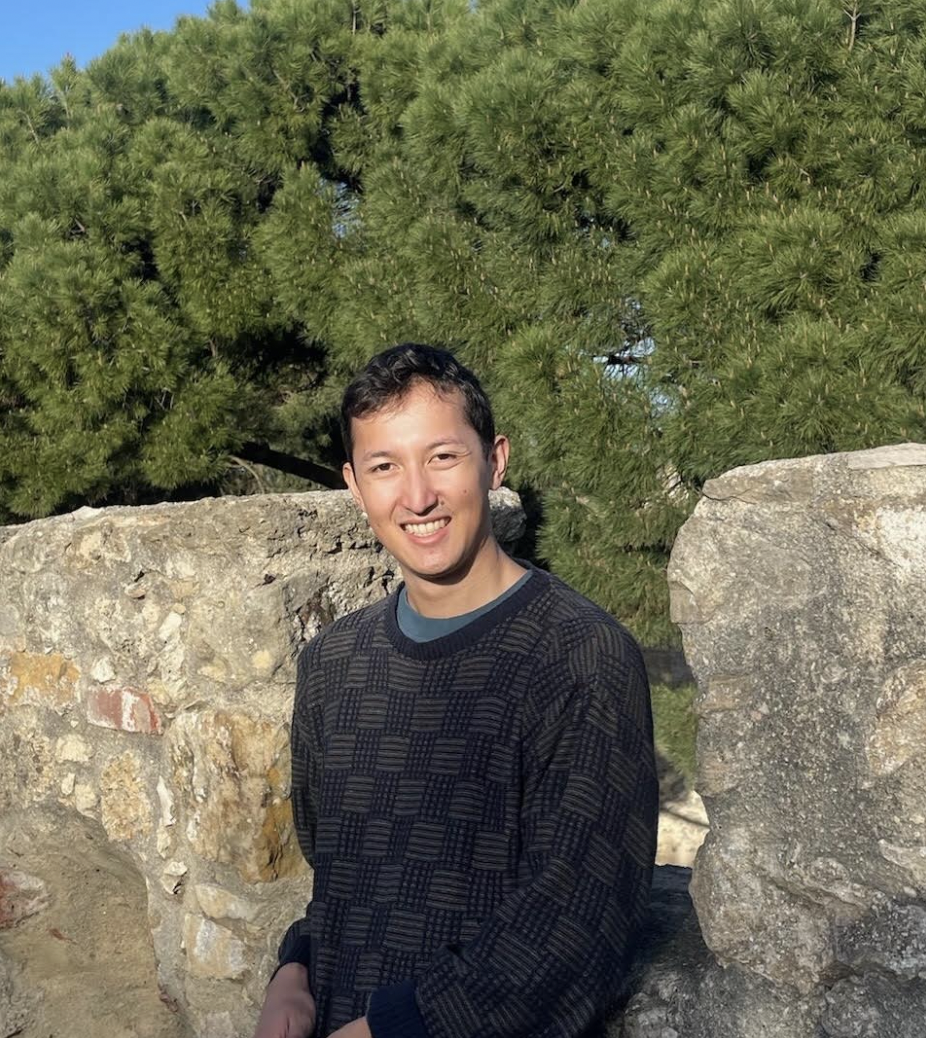
Henry Lin-David is a writer and crossword constructor living in Pittsburgh, PA. His fiction has been published in Inquisitive Eater, ScribesMICRO, and Flash Fiction Magazine, and his crosswords have appeared in the New York Times. Learn more at henrylindavid.com.